CloudCockpit Team | Published July 21, 2026
A scoped self-service portal does not replace the CSP customer relationship, because Microsoft already requires the partner to be the customer's only point of contact for support and subscription changes. What changes with a portal is not who owns the relationship; it is which requests still need a human. Below is the distinction that matters: routine work versus relational work, and why only one of them needs to move.
Why do CSP customers have to contact you for everything?
CSP customers cannot open a support request directly with Microsoft. Microsoft's own documentation is explicit: "CSP customers can't create support requests themselves. They must contact you for support." Direct Bill partners own that relationship end to end, and Indirect Resellers work through their Distributor for the same responsibility.
That design choice is why routine requests and relational conversations land in the same inbox today, with nothing filtering them apart before they reach your team. A typical week for a CSP support team includes:
- A customer asking to add or remove a handful of seats on an existing subscription.
- A customer questioning an invoice line item they don't recognize.
- A customer who doesn't remember when their annual term renews.
- A customer checking the status of a subscription that has nothing to do with pricing or strategy.
None of these require a relationship decision. All of them currently require a person to handle them.
- For Direct Bill and Distributor partners: this support obligation is yours regardless of tooling.
- For Indirect Resellers: the same principle applies, but routed through your Distributor's support structure.
Does Self-Service have to mean a webshop?
No, a self-service portal does not have to expose everything or remove the partner from the sale process. Microsoft's own guidance to partners on building this kind of portal is explicit that it does not mean customers purchase directly through Microsoft Admin Center. It is guidance for the partner to build a portal, under the partner's own brand, on the partner's own terms.
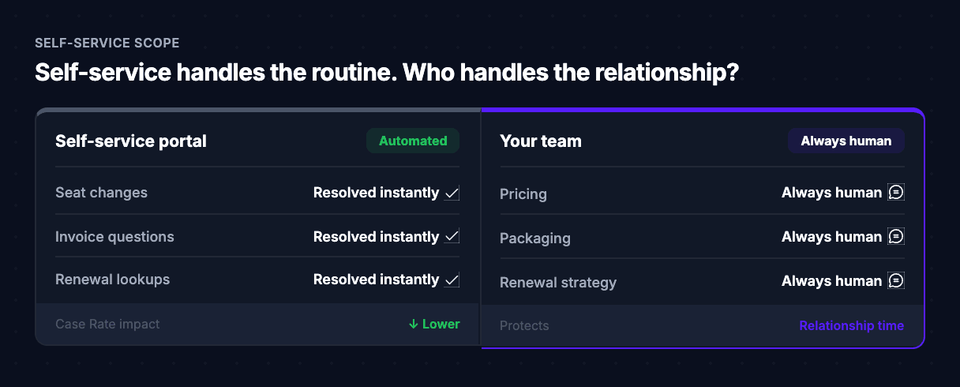
A CSP decides what to expose and what to keep human. A typical scope looks like this:
- Visible to the customer: active subscriptions, invoices, renewal dates.
- Actionable by the customer: seat count changes, routine renewal confirmations.
- Always routed to a person: pricing conversations, packaging decisions, renewal strategy.
Nothing in those first two rows requires exposing the third.
CloudCockpit Note: the reflex to reject self-service because "our customers value the relationship" usually conflates two different things. Customers rarely value having to email someone to check their own renewal date. They value the conversation about what to do next. A scoped portal removes the first and protects time for the second.
Does Microsoft reward partners for reducing routine requests?
Yes, through the Support Services designation, which measures partner support performance using a metric called Case Rate. Case Rate is calculated as CSP Case Volume (TTM) divided by CSP plus ACR Billed Revenue (TTM), multiplied by 1,000,000, and a lower Case Rate scores better.
Every seat change, invoice question, or renewal lookup that a customer resolves through a portal is a support case that never gets opened, which lowers Case Rate without reducing the actual relationship work your team does.
This designation is available to Direct Bill and Distributor CSP partners specifically. Indirect Resellers do not enroll in it directly and depend on their Distributor's standing instead.
How to scope a portal like this?
Scoping self-service correctly is an operational problem before it is a product decision, because a CSP is usually managing agreement data, price lists, and billing across dozens or hundreds of customer tenants at once. Doing that scoping by hand, tenant by tenant, is exactly the kind of routine work this article argues should not consume a support team's time either.
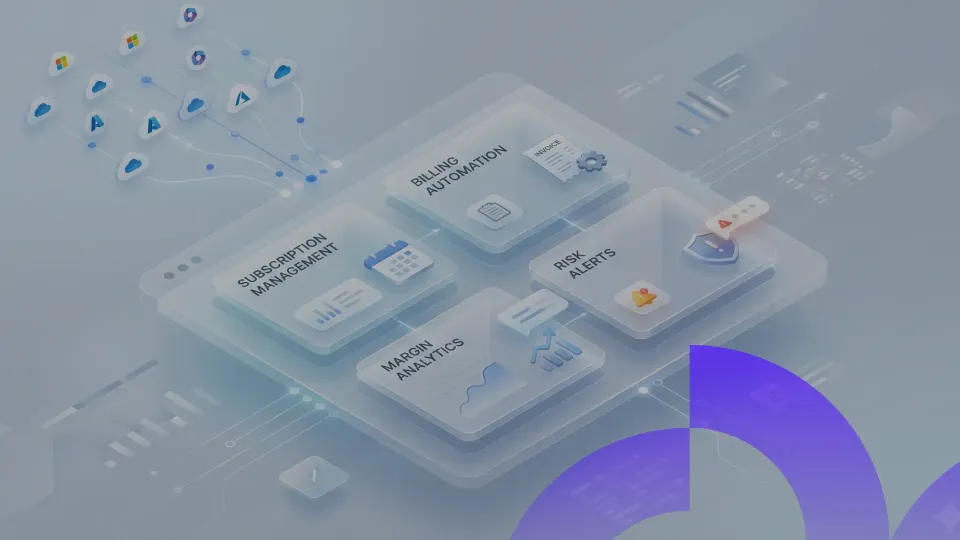
Platforms built specifically for CSP automation exist to solve that layer. A platform like CloudCockpit, for example, centralizes:
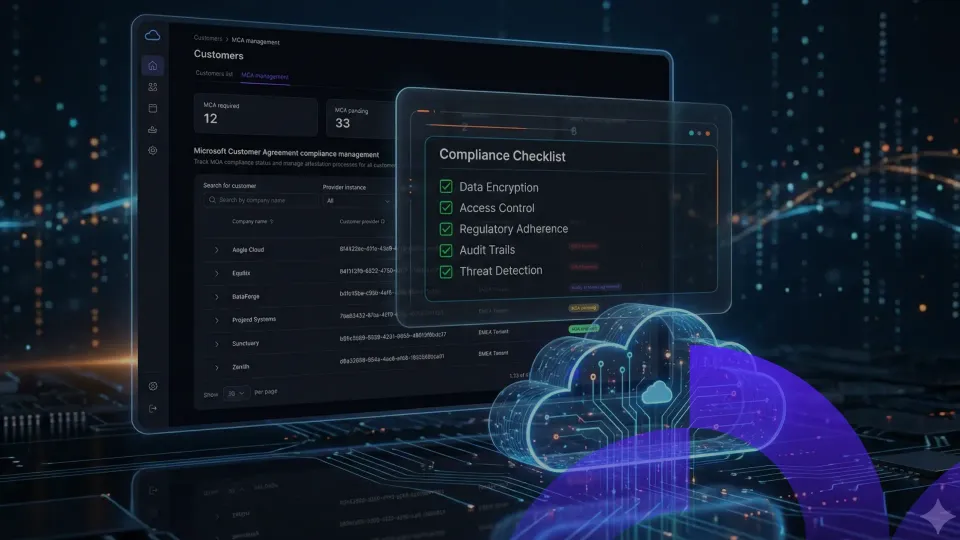
- Customer and agreement tracking, including delegated admin relationships, across every tenant from a single interface.
- Price list and catalog synchronization, so the offers a CSP sells from stay aligned with Microsoft's own price lists automatically.
- Billing and invoice reconciliation, including multi-line invoices, without manual cross-checking against Microsoft's charges.
- Margin rules per reseller or per customer, so a self-service portal can be scoped without losing control over pricing.
- A white-label self-service portal that applies the exact visible-versus-actionable-versus-human split described above, under the partner's own brand.
CloudCockpit has run this model since 2016, across more than 40 countries, managing over €170M in cloud commerce annually for Microsoft CSP partners specifically.
The Bottom Line
Microsoft's CSP program already makes the partner the customer's only point of contact, which is exactly why routine requests and relational conversations end up mixed together in the same queue. A self-service portal scoped to routine tasks, seat changes, invoice visibility, renewal status, does not hand the relationship to a webshop. It removes the noise around the relationship so the conversations that actually require a person, pricing, packaging, renewal strategy, get the attention they need. For Direct Bill and Distributor partners, it also improves the Case Rate metric Microsoft uses to evaluate support performance.
Sources
- Types of support available to your customers: CSP customers cannot open support requests directly with Microsoft.
- Support Services designation: Case Rate formula and eligibility limited to Direct Bill and Distributor partners.
- Microsoft partner community guidance on building a customer self-serve portal (Microsoft Tech Community, partner discussion thread): confirms this is partner-built and branded, and explicitly does not enable direct purchase through Microsoft Admin Center.
- CloudCockpit: product capabilities and company facts referenced in the "What Does It Take to Actually Scope a Portal Like This?" section. Note: the CloudCockpit homepage states 133 M€ value managed, which differs from the 170 M€ figure used in this article; confirm the current figure before publishing.
- CloudCockpit API documentation: confirms the underlying capabilities referenced (customers, subscriptions, orders, invoices, resellers with margin controls, GDAP, offers).